Project-Based Learning at AIM: How Real-World Projects Build Confident, Curious Learners
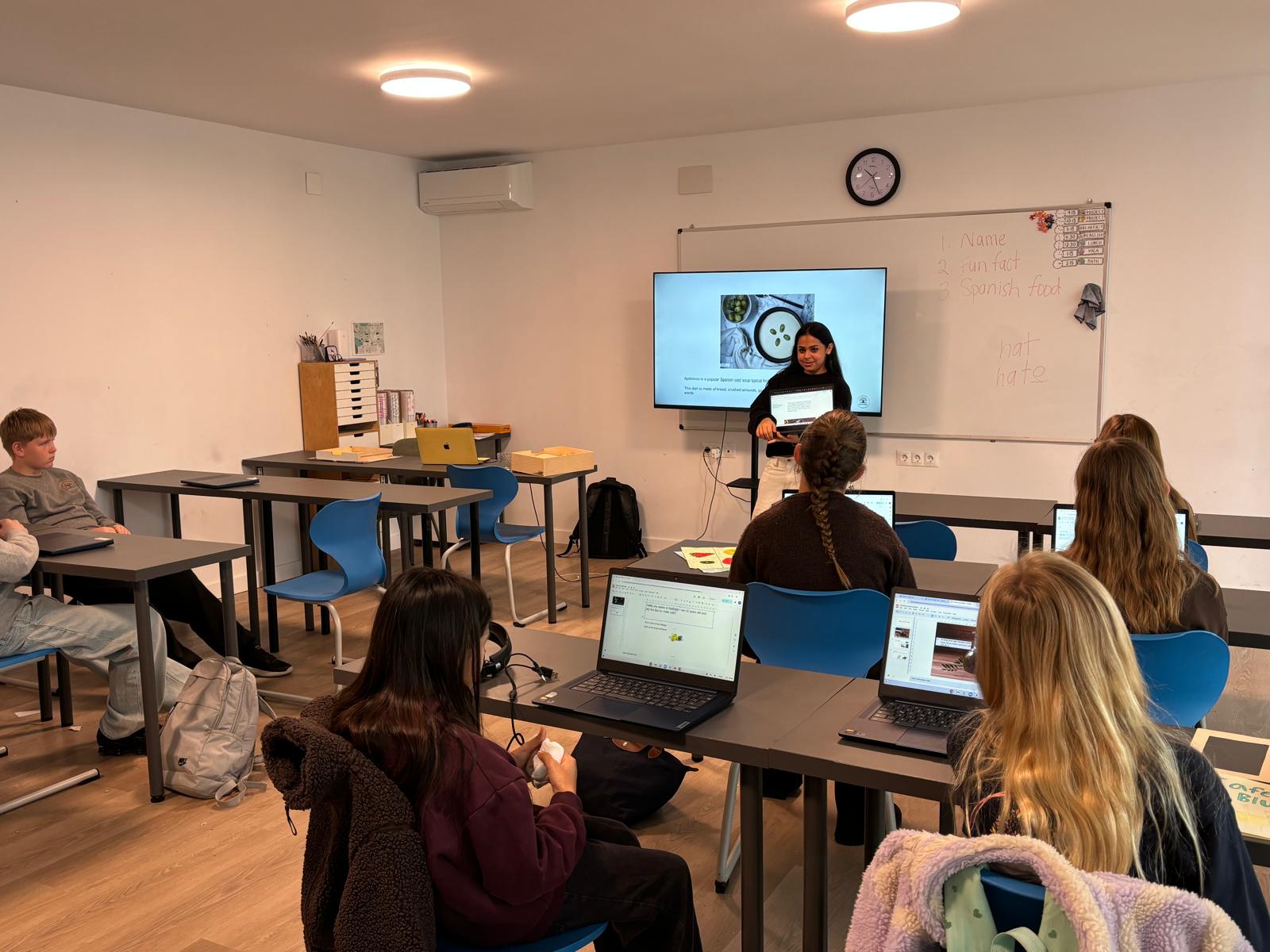
Walk into AIM School on any given afternoon and you might find a group of 9-year-olds building a scale model of a sustainable city, another group filming a short documentary in English and Spanish, and a third presenting their findings on the water cycle to a room of curious parents. This is project-based learning (PBL) — and it''s the heart of how we teach.
What is project-based learning?
Project-based learning is a teaching method where students gain knowledge and skills by working for an extended period to investigate and respond to an authentic, engaging and complex question or challenge. At AIM, every project runs for roughly six weeks and ends with students presenting their work to parents and the wider school community.
Unlike traditional lessons where a teacher delivers content and students absorb it, PBL flips the dynamic. Students own the question. They research, debate, build, test, fail, iterate and present. Maths, science, English, Spanish, art and technology are not separate subjects to be ticked off — they are tools the children pick up naturally because they need them to solve the problem in front of them.
Why we believe in it
The evidence for project-based learning is strong. A 2021 study published by the Lucas Education Research group found that students in PBL classrooms outperformed peers in traditional settings on standardised assessments — and the gains were largest for students who had previously struggled. Beyond test scores, PBL has been linked to:
- Stronger critical thinking and problem-solving skills
- Greater confidence in public speaking and collaboration
- Deeper retention of subject knowledge
- Higher engagement and intrinsic motivation
How a project unfolds at AIM
Each project starts with a driving question — something open-ended and genuinely interesting. Recent examples include:
- How can we design a school garden that feeds itself?
- What did Málaga look like 500 years ago — and how do we know?
- Could we run our classroom on solar power?
From there, teachers map the project against the IPC (International Primary Curriculum) and IMYC (International Middle Years Curriculum) learning goals, ensuring core academic standards are met. Children work in mixed-age teams, conduct research, interview experts, build prototypes and document their journey.
The six weeks culminate in a parent presentation evening, where every child speaks. This is non-negotiable — and it''s one of the reasons AIM students develop such remarkable poise and clarity from a young age.
How PBL fits with our hybrid academic mornings
Project work doesn''t replace strong academic foundations — it builds on them. Our mornings are dedicated to core learning: a hybrid of personalised digital tools (Khan Academy, IXL) and direct teaching in small classes capped at 16 students. Children move at their own pace in maths and English, ensuring no one is left behind and no one is held back.
By the time projects begin in the late morning, students have the skills they need to apply their learning meaningfully.
What parents tell us
The most common feedback we hear from parents is that their child talks about school at the dinner table — often for the first time. They share what their team is building, the problems they''re solving, the things they''ve discovered. That curiosity, that ownership of learning, is exactly what we''re aiming for.
Come and see for yourself
If you''d like to see project-based learning in action, we warmly invite you to book a school viewing. There''s no better way to understand AIM than to walk through our classrooms, meet our teachers and watch the children at work.